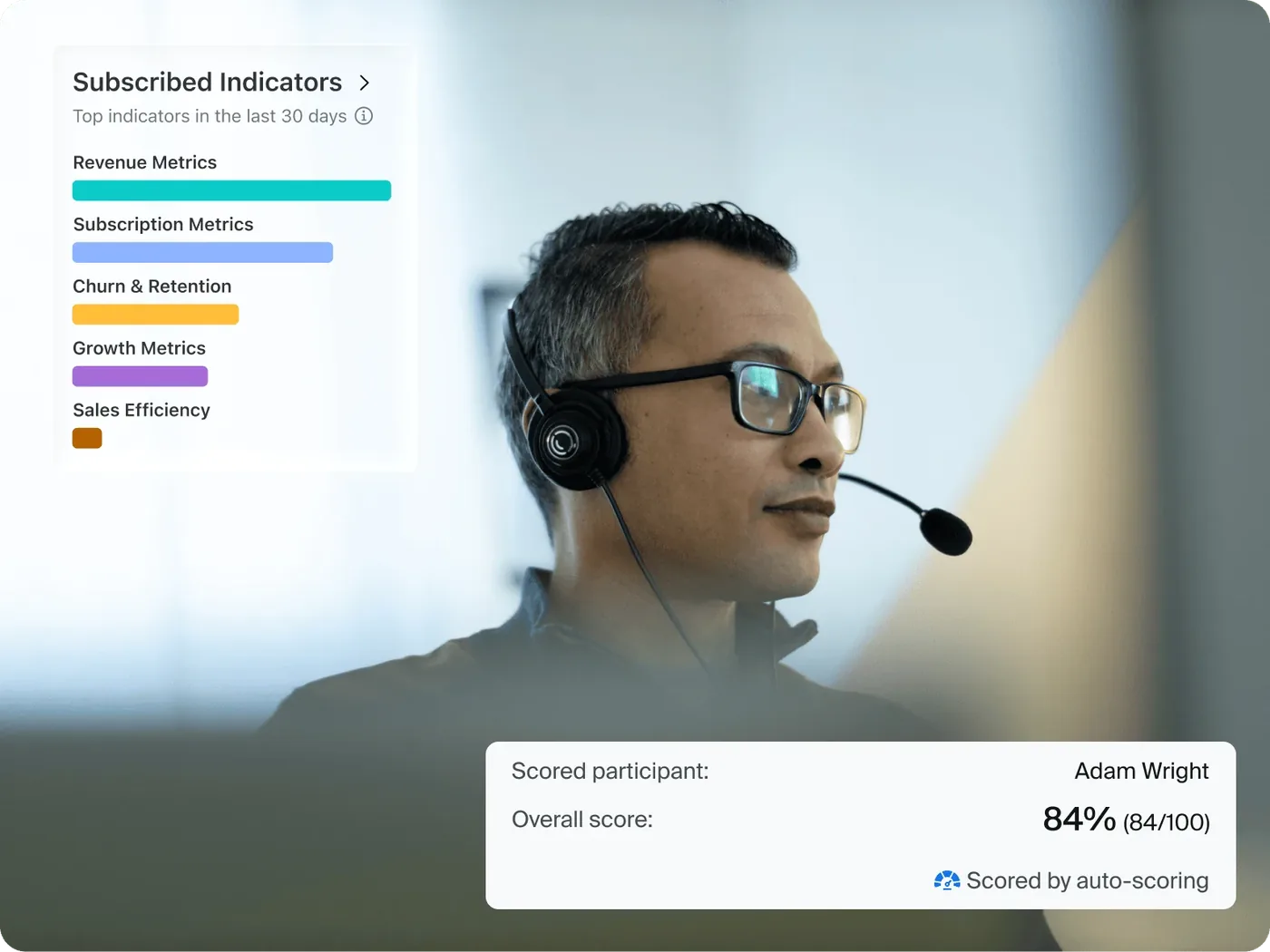



From assistant to agent: from conversation to completion
AI that summarises your meeting is nice. AI that also sends the follow-up, logs the ticket and prepares the deck is something else. That shift is happening now, and it changes how work gets done.
2026: the year AI gets to work
In April 2026, Zoom CTO Xuedong Huang described the next phase of work. For years, AI helped us talk: it transcribed, summarised and translated. Now it moves on to getting the work done that those conversations produce.
- Most work starts in a conversation, and most follow-up gets lost after it
- AI no longer stops at the summary, it carries out the next step
- The promise: from conversation to completion, without the copy-paste in between

From conversation to completion, in four steps
The chain behind every agent in Zoom. The last step is the one that matters most: a person says yes.
-
Step 1
Capture
AI records what is said in the meeting, the chat or the call. Every promise, every “I’ll send it Friday”.
-
Step 2
Interpret
It reads that in context: who said it, which customer, which project, what was agreed last time.
-
Step 3
Act
Agents carry out the follow-up: the email, the ticket, the CRM note, the deck outline.
-
Step 4
Approve
You look it over and say yes. Or no. Either way, the decision stays with a person.
What makes it work
Agents are not magic. They work when four things are in place.
-
Context plays the lead role
An agent is only as smart as what it knows. In Zoom, your conversations are the context: who promised what to whom, and why.
-
Federated AI
Zoom does not bet on one model. It uses several and picks the best one for each task, so you are not stuck with one vendor’s strengths and weak spots.
-
People stay in control
Agents prepare and propose. People review and approve. That keeps the accountability where it belongs.
-
Connected to your systems
The follow-up has to land somewhere. Connectors put it in the tools your teams already use, from Salesforce to Jira.
Where Duppal comes in
The technology is ready. Your workflows, systems and people need a little help to catch up. That is the job of our experts.
- We help you pick the first workflows worth handing to an agent
- We set up the connections to your systems and the permissions that go with them
- We train your people to delegate to AI and check what comes back
- We stay on as your needs grow, as your Zoom Platinum Partner

Your first agents, step by step
Start small, prove it works, then grow. No big-bang AI programme required.
-
Step 1
Pick the first workflows
We look for the follow-ups that happen every week and that nobody enjoys. That is where an agent earns its keep first.
-
Step 2
Set up connections and permissions
We connect Zoom to your systems and decide together what an agent may see, prepare and do.
-
Step 3
Train your people
Hands-on training, so people learn to hand over work and check what comes back.
-
Step 4
Grow from there
Once the first workflows run, we add the next ones, step by step.
Questions we often hear
What is the difference between an AI assistant and an AI agent?
An assistant helps while you work: it summarises, drafts and answers. An agent takes the next step itself: it carries out the follow-up in your systems, and you approve the result.
Do we lose control when agents start acting?
No. People stay in charge and approve what agents prepare. We also set up the permissions, so an agent only reaches what it is allowed to reach.
Which AI model does Zoom use?
Zoom takes a federated approach. It uses several models and picks the best one for each task, instead of relying on a single model for everything.
Where do we start?
With one or two workflows that happen often and follow a clear pattern, such as the follow-up after a client meeting. Our experts help you choose them, connect the right systems and train the people involved.
Which follow-up would you hand over first?
Tell us where work gets stuck after a meeting or a call. One of our experts helps you find the first workflow worth giving to an agent.