



From real-time deal guidance to automated follow-ups and smarter customer conversations, a grounded look at what AI sales tools like Zoom AI Companion and Virtual Agent actually do for large sales organisations.
For large sales teams, AI is increasingly being positioned as a solution to one of the profession’s most persistent structural problems. A sales rep finishes a call with a promising enterprise prospect. They discussed pricing, agreed on a follow-up demo, and the rep promised to send a tailored proposal by Friday. The conversation was good. What comes next is not. They now need to update the CRM, write a summary email, pull together a proposal, schedule the next meeting, and brief their manager, all within 30 minutes of the next call.
This is not a productivity problem unique to one rep. It is mostly a structural problem that plays out thousands of times a week across large sales organisations. Conversations generate work, and that work eats into the time and attention that should be going towards the next conversation.
Zoom is positioning its AI tooling as a solution to exactly this. Two of its products – AI Companion, embedded across the Zoom Workplace platform, and Zoom Virtual Agent, part of its customer experience stack – are now being extended into sales workflows in ways that go beyond summarising meetings or answering FAQs. Here is a grounded look at what they actually do.
How AI Companion handles sales admin automatically
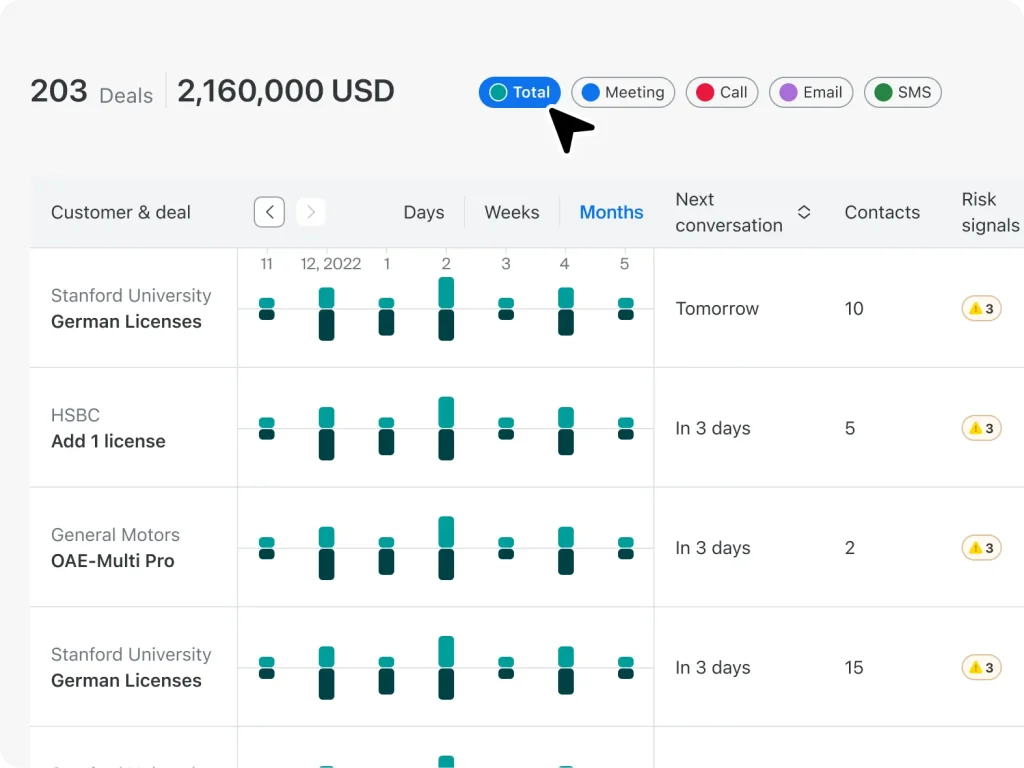
AI Companion’s most direct impact on sales teams occurs in the minutes after a customer conversation ends. Rather than relying on reps to manually log notes, draft emails, and populate CRM fields, AI Companion can now trigger automated workflows that handle these tasks directly from the meeting transcript.
That means a follow-up email, personalised, professional, based on what was actually discussed, can be drafted and sent before the rep has opened their next calendar item. Customer notes can be entered into Salesforce without the rep having to touch the CRM. A sales plan for that specific account, generated from the transcript, can be waiting in their inbox.
For a team of 50 reps, each running 5 meetings a day, the cumulative time saved on this kind of administrative work is substantial. More importantly, it reduces the lag between conversation and action — the window where deals stall and prospects start talking to competitors.
AI Sales Assist: real-time guidance during the call
Post-meeting automation is useful. What Zoom is building toward is arguably more significant: AI that assists during the conversation rather than just after it.
AI Sales Assist will deliver live guidance to sales reps during Zoom Phone calls. As the conversation develops, it surfaces relevant prompts, competitive talking points, and suggested next steps, all without the rep having to pause and search for information. The idea is that a rep talking to a procurement lead should have the relevant procurement objection-handling context in front of them in real time, not buried in a slide deck they prepared last Tuesday.
For sales managers, a complementary tool called Ask ZRA (part of Zoom Revenue Accelerator) provides a natural language interface for pipeline intelligence. Instead of running a report and interpreting it, a manager can ask in plain language why deals were lost last quarter, which objections are appearing most frequently, or which accounts are showing early signs of churn risk. The system draws on data across thousands of recorded interactions to surface those patterns.
How Zoom Virtual Agent fits into the sales process
Zoom Virtual Agent is primarily a customer-experience product designed for contact centres. But its relevance to sales organisations, particularly those with large inbound volumes or complex pre-sales processes, is growing.
The updated Zoom Virtual Agent 3.0, now available, preserves full customer context and history across every touchpoint, whether the customer previously spoke to a human agent, completed a web form, or went through an automated flow. That continuity is meaningful for sales. When a prospect who engaged with a chatbot six weeks ago is routed to a sales rep, the rep does not start from scratch.

Zoom’s internal deployment of Virtual Agent reportedly produced a 25-point increase in customer satisfaction scores, which offers at least some evidence that the system handles interactions at a quality level that does not frustrate potential buyers before they even reach a human.
For high-volume sales environments, think software companies handling thousands of inbound trial sign-ups, or telecoms firms processing large numbers of upgrade enquiries, the ability to automate initial qualification and hand off to a rep with full context intact is operationally significant. It is not a replacement for sales; it is a filter that means sales teams spend more time on conversations that are actually going somewhere.
AI sales tools for forecasting and competitive intelligence
Two further capabilities are worth noting specifically for sales leadership teams.
Weekly sales forecasts, the kind that get presented to leadership and circulated to the team, are a significant time sink when built manually. AI Companion can generate these from existing data, producing structured summaries that can be refined and shared without having to start from a blank document every Friday morning.
Competitive intelligence is a similar story. Sales teams in competitive markets often need to quickly review how a rival has positioned a product, what their pricing looks like, or how their messaging has shifted. AI Companion can accelerate that research and comparison process, giving reps a clearer picture of the competitive landscape without requiring them to spend hours on it.
The caveats worth keeping in mind
None of this is without caveats. Several of the features described here — AI Sales Assist, Ask ZRA, and several automated workflow capabilities — are not yet generally available and are expected to roll out in 2026. Features and timelines may shift.
There is also the question of adoption. AI tools that sit alongside existing workflows tend to get used. Tools that require reps to change how they work tend to get ignored. The value of Zoom’s approach is that much of this automation is designed to happen in the background — the rep does their job, and the system handles the downstream tasks. Whether that holds up in practice at scale is something organisations will need to evaluate for themselves.
The data from Enterprise Connect 2026 makes that challenge concrete. Research by analyst firm Omdia, presented at the conference, asked enterprises what prevents them from realizing significant value from AI. Limited employee training or adoption was cited by 38% of respondents. No clear strategy aligning AI with business goals came in at the same level. Lack of leadership support at 36%. These are not technology problems. They are organisational ones. For sales leaders evaluating tools like AI Companion or Virtual Agent, the implication is straightforward: the implementation decision is the easy part. Getting fifty reps to actually change how they work, and getting leadership to set a clear direction for what that change should look like, is where most AI rollouts quietly stall.
What is clear is the direction of travel. The administrative overhead that has always accompanied sales – the logging, the summarising, the scheduling, the reporting – is increasingly automatable. Teams that reduce this friction give their reps more time to do what still requires a human: having conversations that build trust and close deals.
Ready to close more deals?
Make Zoom AI work for you
Go directly to
Solutions
Consultancy
User services
Cases
Duppal

Virtual cup of coffee? Yes please!
We bring the ingredients for you to deliver inspiring meetings – you just need to provide good coffee!
Contact us